Now shipping locally for US customers, global shipping from the UK

Intro

Formula SAE is an international engineering competition where student teams compete with single-seater race cars they have designed and built themselves. Mantracourt have sponsored the ‘Ecole de Technologie Superieure’ engineering team from the University of Quebec since 2009, providing instrumentation for their prototype design and build.

Over 450 teams, from 41 different countries, spread across 5 continents take part in the competition and there are major Formula SAE events held in the USA, UK and Germany. Events also take place all over the world in countries such as Austria, Hungary, Japan, Thailand, Brazil and Australia.

The ETS Formula SAE Team from the University of Quebec is renowned for its lightweight and ergonomic car design.  The cars have an excellent suspension design and has been praised for its scientific approach to vehicle validation and development.
The Challenge

The team designed a new differential assembly for the 2011 prototype. Theoretical calculations are always a good approach when designing from scratch. However, validation and data acquisition are a must for the development.

The team needed to monitor the behaviour of the system as, initially, there were a few concerns. Typical strain gauge installation was not an option for the measurement of torque transmitted to the driveshaft because of rotation. The required wireless data transmission couldn’t even be partly stationary (e.g. the receiving antenna) as the shaft is always moving. Finally, the shape and physical packaging of the rear of the car did not provide easy installation of a wireless data transmission system.

The Solution

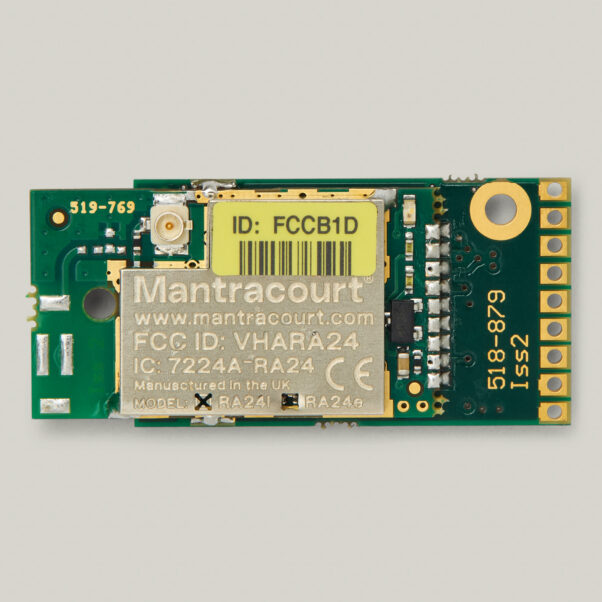
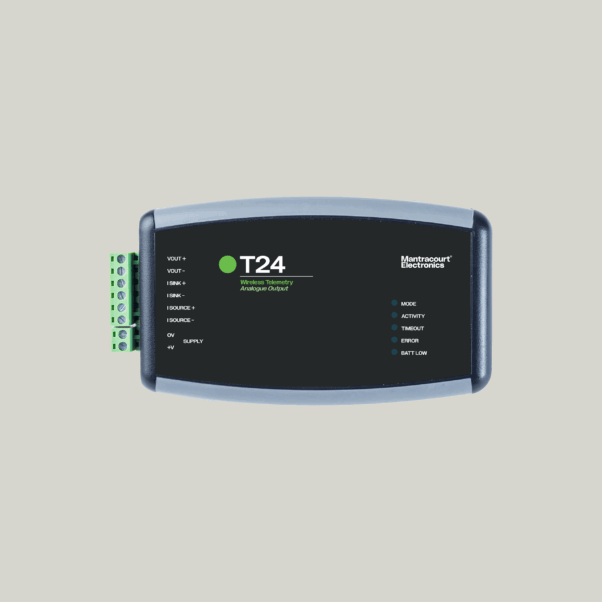
To begin with technicians installed strain gauges on each driveshaft. They connected these to a strain gauge to radio telemetry T24-SA transmitter. A machined short cylinder, acting like a holder for the transmitter and the battery, mounted on the driveshaft. The team installed the T24-AO1 wireless receivers on a bracket near the transmitter for better signal transmission. They then connected these to the car’s data acquisition system (Motec ACL). Engineers required a calibration to convert the electric signal into a known torque. To obtain this, they used a lever supporting a known weight to apply the desired torque.

If you have an application requirement in the torque measurement industry we are here to help.  Please contact us.

Search